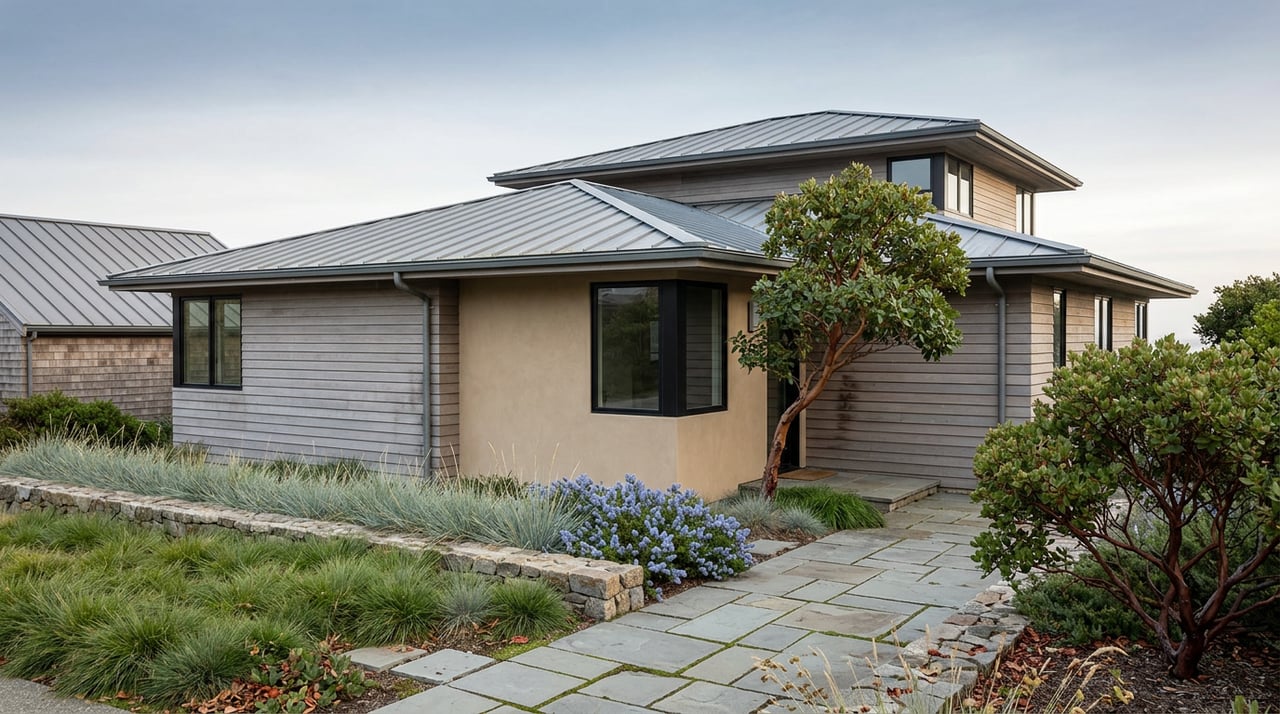
Buying a Vacation Rental in Pismo Beach? The License Doesn't Come With the House
A couple touring a cottage two blocks from the pier hears the pitch: established Airbnb, five years of five-star reviews, income history available on request. The listing photos show a fire pit, a stack of beach chairs, a binder of guest instructions. Everything about the property says the rental business transfers with the keys.
It doesn't. Not automatically, and in most of Pismo Beach, not at all.
The rental income a seller shows you belongs to a license. The house is real property. The license is not. Pismo Beach's own ordinance treats a short-term rental permit as personal property of the operator, something that exists separately from the parcel and does not pass to a new owner at closing. A buyer can inherit the fire pit and the reviews. They cannot assume they're inheriting the right to keep collecting nightly bookings.
The city adopted Ordinance O-2023-006 on November 7, 2023, and it changed the ground rules for anyone hoping to buy into short-term rental income here. Before that date, homeowners across residential neighborhoods could apply for a short-term rental license and start hosting. After it, the city stopped issuing new residential STR licenses altogether. At the time of adoption, 28 properties held an active short-term rental or homestay license. That number is effectively the ceiling for houses in standard residential zones. It does not grow when a buyer wants in.
The ordinance is explicit about what happens at a sale: the license is the operator's personal property, not something attached to the land, and it does not run with the property when it changes hands. A buyer purchasing a licensed STR is not purchasing the license itself. They're purchasing a house that, as of the day before closing, had one. What happens after closing depends entirely on rules that no longer allow new applications in that zone.
This is the detail that gets lost in a listing description built around trailing revenue. The number on the flyer describes what the seller earned under a license that ends when they sell.
Pismo Beach actually runs two separate licensing systems, and confusing them is where most buyers get tripped up.
Short-term rentals apply to single-family homes in residential zones, R-1, R-2, R-3, RSL, RSM, PR, OS-1 and OS. This is the track that froze in November 2023. If a property sits in one of these zones and doesn't already hold a license, there is currently no path to get one, regardless of how the seller marketed it.
Vacation rentals are a different category entirely, permitted in commercial and mixed-use zones, C-1, RR, R-4, and several Downtown Core variants. The Downtown Core, defined as Planning Area K in the city's General Plan, is specifically carved out from the short-term rental chapter. Properties there follow the vacation rental rules instead, and as of now the city reports no waitlist for new vacation rental applications. A buyer looking at a condo or mixed-use unit in that zone has an actual application process available to them. A buyer looking at a beach bungalow three blocks away in an R-1 zone does not, no matter what the listing implies.
That distinction, more than square footage or ocean glimpse, is often the difference between a property that can generate licensed nightly income for a new owner and one that can only ever generate long-term rent or owner-occupied use.
Buyers eyeing a property with a backyard ADU sometimes assume it opens a workaround. It doesn't, at least not the way most people picture it. Pismo Beach does not allow ADUs to be rented independently as short-term rentals. The only path involves the owner living in the ADU and treating the main house as the licensed unit, or, if the ADU is attached to the primary residence, obtaining a homestay license and living on site. Either way, the owner has to actually reside in the unit they're not renting out. There's no version of this where an investor lives elsewhere and rents both structures on a nightly basis.
Homestays themselves work differently from full STRs. There's no cap on the number of rental days per year, as long as the owner is present during the stay. That makes a homestay license genuinely useful for someone planning to live in Pismo Beach and rent a room or a portion of their home while they're there. It is not a substitute for the whole-house rental income a buyer might be picturing.
For the trailing twelve months through roughly June 2026, Pismo Beach's short-term rental market shows 468 active listings citywide, average occupancy of 49%, an average daily rate near $381, and RevPAR of $178. Average annual revenue per listing sits around $35,100.
Look one layer deeper and the trend is more interesting than the headline number. Occupancy is up 3.9% year over year, but RevPAR is down 6.9% over that same stretch. Hosts are filling more nights while earning less per available night, which points to rate competition among existing operators rather than growing demand pushing prices up. That matters for underwriting. A seller's trailing twelve months of revenue reflects rates set in a market that was already softening. Extending that same daily rate forward, especially at the far end of a scarce and non-transferable license pool, assumes a pricing environment that the data suggests is already shifting.
None of this means Pismo Beach vacation rental ownership is closed off. It means the due diligence has to happen earlier than most buyers expect, before an offer, not during escrow.
Confirm the zoning designation with the city's Planning Division rather than relying on how a listing describes the property. Ask whether the specific address appears on the city's published list of currently licensed short-term rental properties, since that list is the only reliable record of what's actually active. Request the license number and its renewal date, since STR and vacation rental licenses expire every September 30 and require annual renewal, with STR operators also submitting proof of primary residence each year. Ask about occupancy tax filings, since guests currently pay roughly 14.5% combined in transient occupancy tax, lodging business improvement district, and tourism marketing district assessments, a cost that affects net revenue calculations. If the property sits inside an HOA, read the CC&Rs, since private restrictions can prohibit short-term rentals even where city zoning allows them. And if the property is in a Downtown Core or commercial zone, budget real time for a new vacation rental application, since a buyer there starts the process from zero no matter what the previous owner had in place.
Does an existing short-term rental license transfer to a new owner at closing? No. The city's ordinance defines the license as the operator's personal property, and it does not run with the land or transfer with a sale.
Is there currently a waitlist to apply for a new vacation rental permit? Not for vacation rentals in eligible commercial and mixed-use zones. Short-term rental licenses in residential zones, by contrast, are not being issued at all under the current ordinance.
Can I rent out a room in my own home while I live there? Yes, through a homestay license, which allows an unlimited number of rental days per year as long as the owner is present during the stay.
Every one of these questions has a different answer depending on the exact address, and that's the part a flyer can't tell you. If you're weighing a Pismo Beach property with rental income in mind, or trying to figure out what a listing's trailing revenue actually means for you as a new owner, I'd rather walk through the zoning and licensing specifics with you before you write an offer than after. Reach out to Gena Isaacson and let's connect.


Ever wonder how mortgage funding actually works? Discover the cycle of mortgage-backed securities and the role of Fannie, Freddie, and Ginnie Mae.

Understanding the risks of lead poisoning in older homes and the legal requirements for buyers and sellers.

A strategic guide to preparing your home for sale, finding the right agent, and mastering the negotiation process for the best results.

Is homeownership still a wise financial move? We break down the long-term investment benefits, tax advantages, and personal rewards of buying a home.

Discover why you can achieve the benefits of a biweekly mortgage on your own for free without the extra fees.

Understand why title insurance is a necessary component of your home loan refinance process and how it protects your lender.
You deserve more than a standard real estate experience. I take the time to understand your priorities, provide honest local insight, and create a strategy around what matters most to you. With personalized attention from start to finish, I’m here to make the process feel clear, thoughtful, and purposeful.
